Shandong Qilu lndustrial Co.,Ltd.

7 Reasons Forged Steel is the Best Option for Your Projects
Welcome to My Blog!
Before we dive into the content, I’d love for you to join me on my social media platforms where I share more insights, engage with the community, and post updates. Here’s how you can connect with me:
Facebook:https://www.facebook.com/profile.php?id=100090903441806
Now, let’s get started on our journey together. I hope you find the content here insightful, engaging, and valuable.
Table of Contents
Introduction
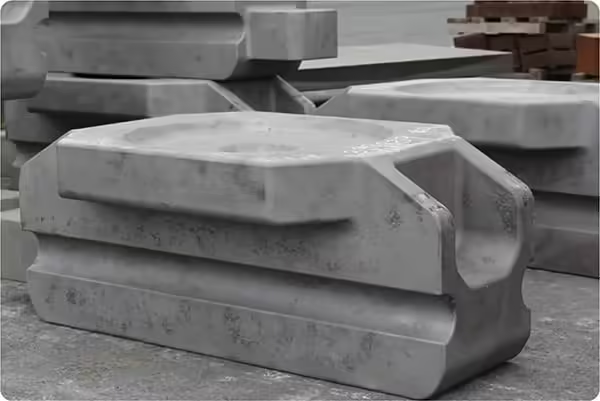
Choosing the right material is crucial when embarking on a construction or manufacturing project. Forged steel has gained a strong reputation as one of the most reliable and durable materials available today. Whether you’re working on machinery, automotive components, or structural elements, its benefits are undeniable. In this comprehensive guide, we’ll explore seven reasons why forged steel is often the best option for your projects, highlighting its superior strength, performance under stress, and versatility across industries.
NO 1. Superior Strength
Forged steel is one of the most valued materials in a wide range of industries, primarily because of its exceptional strength and ability to withstand immense stress. Its strength is a direct result of the forging process, where steel is heated to high temperatures and then shaped under high pressure. This method compacts the material, causing its grain structure to realign and refine, which leads to significant improvements in its mechanical properties.
The advantage of this process is that forged steel has a much higher strength-to-weight ratio compared to other types, such as cast steel. Unlike cast steel, which may have inherent weaknesses due to air pockets or inconsistencies in the material’s structure, this type of steel is much denser and free from such defects. As a result, it is able to resist both tensile and shear forces more effectively, making it ideal for applications that require materials to bear heavy loads.
In practical terms, the superior strength of this material allows it to be used in a wide variety of applications, ranging from infrastructure projects like bridges and skyscrapers to precision machinery in industries like aerospace and automotive. Whether you need to build load-bearing structures, create high-performance tools, or manufacture critical components for machinery, it provides the strength required to meet these challenges.
Its robustness also allows it to perform reliably in extreme environments where other materials might fail. For instance, components exposed to extreme weather conditions, high temperatures, or heavy wear and tear benefit from its strength, ensuring long-lasting and dependable performance.
Moreover, the strength of this material enhances its resistance to deformation, meaning that it retains its shape and performance even under significant mechanical stress. This makes it an ideal choice for manufacturing parts such as gears, shafts, and structural components that undergo frequent or high-stress usage.
In addition, the durability that comes with its superior strength contributes to the overall efficiency and safety of a project. By reducing the frequency of repairs and replacements, it proves to be not only strong but also cost-effective in the long run, making it a preferred material for industries that demand both reliability and longevity.
Ultimately, when strength and reliability are non-negotiable, this material stands as one of the most dependable options, ensuring that your projects are built to last under even the most challenging conditions.
NO 2. Enhanced Durability and Resistance to Wear
In industries where materials are subjected to continuous stress and wear, the durability of the materials used becomes critical. Forged steel stands out for its ability to withstand extreme conditions, including high temperatures, pressure, and mechanical stress. This makes it an excellent choice for parts that experience frequent use or operate in harsh environments.
Forged steel’s toughness ensures that it resists cracks, fractures, and other forms of wear, which helps to extend the lifespan of machinery and equipment. The longevity of forged steel contributes to the cost-effectiveness of projects, as it reduces the need for frequent replacements and maintenance.
NO 3. Forged Steel’s Impact and Fatigue Resistance
One of the most significant advantages of forged steel is its resistance to both impact and fatigue. Components made from forged steel can handle sudden shocks or vibrations without failing, which is essential in industries such as automotive and aerospace.
The forging process compacts the material and improves its internal structure, making it far more resistant to fatigue than cast or welded steel. This means that forged steel can withstand repeated stress and strain, providing long-term reliability for components that are exposed to heavy impacts or cyclic loads.
Table: Comparison with Other Materials
| Property | Forged Steel | Cast Steel | Welded Steel | Stainless Steel |
|---|---|---|---|---|
| Strength | High | Moderate | Moderate | High |
| Durability | Excellent | Good | Fair | Good |
| Impact Resistance | Very High | Moderate | Low | Moderate |
| Resistance to Fatigue | Excellent | Fair | Poor | Good |
| Cost | Higher | Lower | Moderate | Higher |
NO 4. Versatility Across Industries
Steel is incredibly versatile and can be used in a variety of applications across numerous industries. Whether you’re designing complex machinery parts or building structural elements for construction, this material offers the flexibility required for both high-precision and heavy-duty applications.
From automotive components like gears and axles to aerospace parts and industrial equipment, its adaptability allows it to be used in different environments with a wide range of requirements. This makes it an essential material for a vast array of projects, whether you need precision or robustness. Its ability to be molded and shaped for different uses makes it invaluable across sectors, ensuring reliable performance across various industries.
NO 5. Better Performance in Extreme Temperatures
When working in environments where temperatures fluctuate significantly, this material proves to be a reliable choice. Its ability to perform under both high and low-temperature conditions makes it suitable for industries such as oil and gas, aerospace, and power generation.
Unlike other materials that may become brittle in cold temperatures or lose strength under heat, steel maintains its structural integrity in extreme environments. This makes it the go-to choice for applications requiring heat resistance, such as components in turbines, engines, and machinery operating under harsh conditions. Whether exposed to freezing cold or intense heat, its durability and strength remain intact, making it ideal for such challenging environments.
NO 6. Forged Steel Provides Consistency in Manufacturing
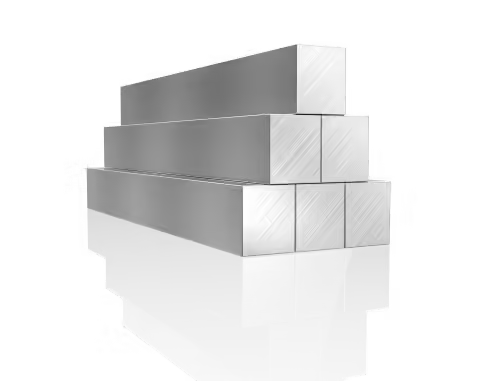
Forged steel ensures that you get a consistent and uniform product, which is vital in many industries, particularly in automotive and aerospace manufacturing. The forging process improves the material’s homogeneity, ensuring that each piece is free from internal defects like porosity and inclusions. This consistency leads to higher-quality products, reducing the risk of failure during operation.
The ability to achieve precise tolerances with forged steel also means that components will fit better and perform more efficiently, which can improve overall project quality and reduce costs associated with errors or reworks.
NO 7. Cost-Effectiveness in Long-Term Projects
While forged steel can initially cost more than other materials like cast steel or welded steel, its long-term benefits far outweigh the initial investment. The superior strength, durability, and resistance to wear mean that forged steel components require fewer replacements and repairs over the lifetime of a project.
When factoring in the cost of maintenance and downtime, forged steel proves to be a cost-effective solution for long-term projects. The reduced need for frequent replacements and repairs can result in significant savings over time, making forged steel a wise investment for many industries.
Conclusion
Forged steel offers numerous benefits that make it an ideal material for a wide range of projects. From its superior strength and durability to its resistance to wear and impact, forged steel provides long-lasting performance in demanding applications. Its versatility across industries, combined with its ability to withstand extreme conditions, makes it the best option for construction, automotive, aerospace, and manufacturing projects. Though the initial cost may be higher, the long-term benefits of forged steel make it a worthwhile investment.
FAQ
Q1: What is forged steel?
Forged steel is a type of steel that has been shaped using high-pressure methods, typically at elevated temperatures. This process improves its grain structure, resulting in increased strength, toughness, and resistance to wear.
Q2: How does forged steel compare to cast steel?
Forged steel is generally stronger and more durable than cast steel. The forging process creates a more uniform material, which provides better resistance to fatigue and impact.
Q3: What are the main applications of forged steel?
Forged steel is commonly used in applications such as automotive components, industrial machinery, aerospace parts, and structural elements in construction due to its strength, durability, and resistance to wear and extreme conditions.
Q4: Is forged steel more expensive than other types of steel?
While forged steel may have a higher upfront cost compared to materials like cast steel, its long-term durability and reduced need for maintenance make it a more cost-effective solution over time.
Q5: Can forged steel be used in high-temperature environments?
Yes, forged steel is highly resistant to high temperatures, making it suitable for use in environments such as turbines, engines, and other high-heat applications.