Shandong Qilu lndustrial Co.,Ltd.

Aluminum Forging vs Casting: Which Is Better?
Table of Contents
Introduction
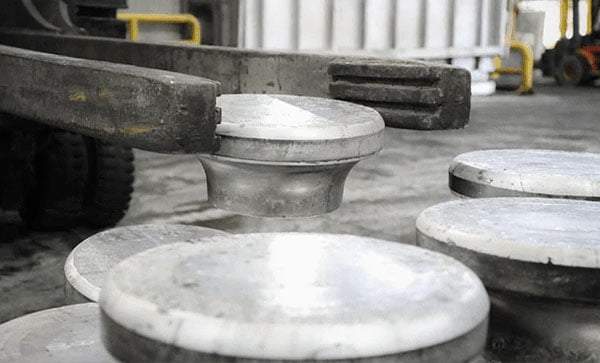
When making metal components, engineers often face a tough choice: aluminum forging or casting? Both methods shape aluminum for industries from aerospace to consumer goods, but they produce parts with vastly different strengths, durability, and costs. The “better” choice truly depends on your project’s specific needs.
As a top manufacturer of quality forgings like shafts, rings, and discs, Qilu specializes in advanced metal forming. We’ve invested heavily in cutting-edge equipment, from 200 to 4000 tons, to ensure our products meet the highest quality standards. We can produce forgings from 1 to over 100,000 pieces and ensure fast global delivery. This blog will help you understand the differences between aluminum forging and casting to make the best decision for your project.
Key Differences Between Aluminum Forging and Casting
To understand which process is “better” for a given application, it’s essential to first grasp the fundamental differences in how aluminum forging and casting transform raw material into a finished component.
The Casting Process
Casting involves melting aluminum and pouring it into a mold cavity, where it solidifies into the desired shape. This process can utilize various techniques, including sand casting, die casting (high-pressure, low-pressure, gravity), investment casting, and permanent mold casting. Each method offers different levels of precision, surface finish, and tooling cost.
- Process Overview: Molten metal fills a cavity.
- Microstructure: As the molten metal cools, it solidifies, forming a crystalline structure. This structure is typically random, isotropic, and coarse-grained. It can also be prone to internal defects such as porosity (small voids or bubbles) and inclusions (impurities), which occur during solidification. These defects can act as stress concentrators.
- Tooling: Molds are generally less expensive to create than forging dies, especially for intricate shapes, making casting attractive for lower volume production or complex geometries that are difficult to forge.
- Design Flexibility: Casting offers high design flexibility, allowing for very complex shapes, internal passages, and intricate details that would be challenging or impossible to achieve with forging.
The Forging Process
Aluminum forging, on the other hand, is a deformation process where solid aluminum is shaped through localized compressive forces, typically using a hammer or a press. The metal is heated (hot forging) or kept at room temperature (cold forging or warm forging) and then precisely shaped within dies or by open tooling.
- Process Overview: Solid metal is plastically deformed under pressure.
- Microstructure: The most significant difference lies in the microstructure. Forging mechanically works the metal, refining its internal grain structure and causing the grains to elongate and align with the part’s contours (known as grain flow). This continuous, aligned grain flow eliminates internal porosity and defects, creating a denser, more homogeneous material.
- Tooling: Forging dies are typically more expensive to design and manufacture than casting molds, especially for closed-die forging. This makes forging generally more cost-effective for high-volume production where the die cost can be amortized over many parts.
- Design Flexibility: While forging can produce complex shapes, it typically has less design flexibility than casting, particularly for parts with intricate internal features or sharp corners. However, advancements in precision forging have expanded its capabilities significantly.
Why Choose Aluminum Forging Over Casting?
The fundamental differences in processing lead to distinct advantages for aluminum forging in many critical applications.
1. Superior Strength and Durability
The primary reason to choose aluminum forging over casting is the superior strength and durability of the resulting components. The mechanical working of the metal during forging refines the grain structure, eliminating internal defects like porosity and inclusions that weaken cast parts. This dense, uniform structure means forged aluminum can withstand higher tensile, yield, and impact stresses. For applications where component failure could be catastrophic, such as in aircraft or high-performance vehicles, the inherent strength of forged aluminum is invaluable.
2. Enhanced Fatigue Resistance
Components in dynamic systems are often subjected to repeated loading and unloading cycles, which can lead to fatigue failure. Forged aluminum parts exhibit significantly better fatigue resistance than cast parts. This is due to the optimized grain flow created during forging, where the metal’s internal fibers are aligned along the part’s contours. This continuous grain flow inhibits the initiation and propagation of cracks, extending the component’s lifespan under cyclic stress. Cast parts, with their random grain structure and potential for micro-voids, are much more susceptible to fatigue cracks.
3. Optimized Grain Flow and Impact Toughness
The unique grain flow characteristic of aluminum forging provides directional strength, meaning the material is strongest along the lines of stress it will encounter in service. This results in superior impact toughness, or the ability to absorb energy and deform plastically without fracturing. Cast aluminum, lacking this organized grain flow, tends to be more brittle and less capable of withstanding sudden impacts or shock loads without cracking. For applications requiring resistance to sudden forces, forged aluminum is the clear winner.
4. Better Material Utilization and Cost-Effectiveness (Long Term)
While the upfront tooling cost for aluminum forging dies can be higher than for casting molds, forging often proves more cost-effective in high-volume production. Forged aluminum parts are typically produced to a near-net shape, meaning they are very close to their final dimensions, requiring minimal subsequent machining. This significantly reduces material waste (chips and scrap), machining time, and labor costs. Casting, particularly sand casting, can require more extensive machining to achieve final tolerances, leading to more material loss and higher finishing costs. The superior mechanical properties of forged parts also lead to longer service life and reduced warranty claims, offering long-term economic benefits.
5. Excellent Surface Finish and Dimensional Accuracy
Aluminum forging, especially precision forging, can produce parts with a much finer surface finish and tighter dimensional tolerances than most casting methods. The compressive forces in forging smooth the surface and ensure the material fills the die cavity precisely. This reduces the need for extensive post-forging finishing operations like grinding or polishing, saving time and cost. Castings, particularly sand castings, often have rougher surfaces and require more secondary finishing.
The Strength and Durability of Forged Aluminum vs Cast Aluminum
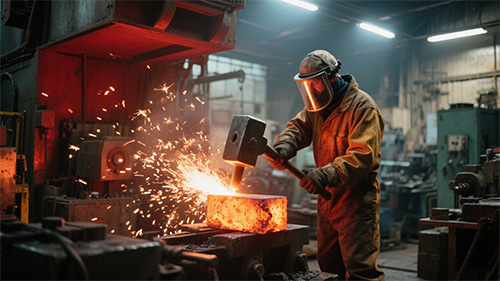
A direct comparison of the mechanical properties provides compelling evidence for the superior strength and durability of forged aluminum over cast aluminum.
Microstructure and Defect Reduction
The primary reason for the difference in strength lies in the microstructure. Cast aluminum, formed from molten metal, solidifies with a dendritic (tree-like) grain structure that is typically coarser and more random. During solidification, there’s a risk of entrapped gases, shrinkage porosity, and non-metallic inclusions, all of which act as weak points and stress concentrators within the material. These internal defects can significantly reduce the mechanical properties and reliability of the cast part.
Conversely, aluminum forging involves plastic deformation of solid metal. This mechanical working breaks down the coarse as-cast dendritic structure of the original billet, refining the grains and orienting them into a continuous flow that follows the contours of the part. This process effectively eliminates internal voids, porosity, and segregations, creating a dense, homogeneous, and isotropic (or directionally anisotropic, with enhanced properties along the grain flow) microstructure. The absence of internal defects makes forged aluminum inherently stronger and more resistant to failure.
Quantitative Comparison of Mechanical Properties
While exact values depend on the specific alloy and heat treatment, general trends show forged aluminum outperforming cast aluminum across key mechanical properties:
- Tensile Strength & Yield Strength: Forged aluminum typically exhibits 20-40% higher tensile and yield strength compared to equivalent cast aluminum alloys. This means it can withstand significantly greater pulling or bending forces before breaking or permanently deforming.
- Elongation & Reduction in Area (Ductility): Forged aluminum generally shows much higher ductility, indicating its ability to deform significantly without fracturing. This makes it tougher and more resistant to brittle failure under impact or unexpected overloads.
- Fatigue Limit: The fatigue limit (the maximum stress a material can withstand for an infinite number of cycles without failure) is substantially higher for forged aluminum, often by a factor of 2 to 3 times that of cast aluminum. This is critical for components subjected to cyclic loading.
- Impact Strength: Forged aluminum demonstrates superior impact strength, meaning it can absorb more energy before fracturing when subjected to sudden, sharp blows.
These enhanced mechanical properties directly translate into increased durability, reliability, and a longer service life for components made from forged aluminum.
Applications of Forged Aluminum in Aerospace and Automotive Industries
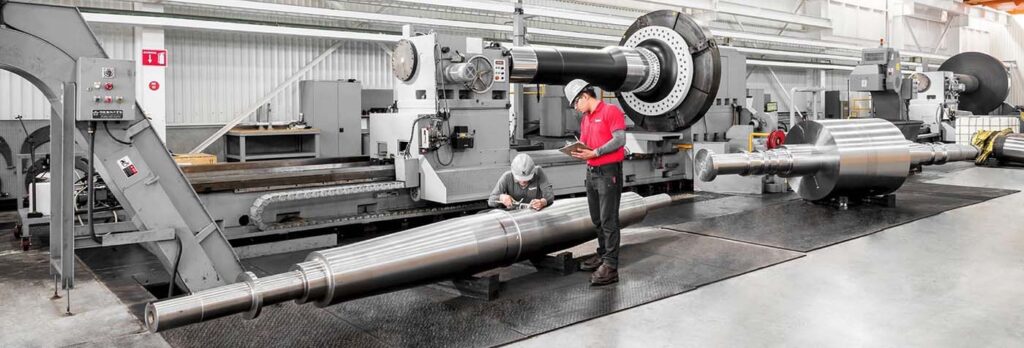
The stringent demands of the aerospace and automotive sectors perfectly illustrate why aluminum forging is often the preferred manufacturing method for critical components.
Aerospace Industry
In aerospace, the mantra is “lighter, stronger, safer.” Every kilogram saved in aircraft design translates to increased fuel efficiency, greater payload capacity, and reduced operational costs. At the same time, the components must withstand extreme stresses, temperatures, and fatigue cycles.
Forged aluminum is ideal for:
- Landing Gear Components: These parts experience immense impact loads during takeoff and landing. Forged aluminum offers the required strength, impact toughness, and fatigue resistance.
- Wing Spars and Ribs: Critical structural elements that must endure constant flexing and aerodynamic loads. The superior fatigue properties of forged aluminum are essential here.
- Airframe Structural Brackets and Fittings: Used throughout the aircraft to connect major assemblies. Their high strength-to-weight ratio is crucial.
- Engine Parts: While often involving superalloys, certain engine components, especially those in the cooler sections or for smaller aircraft, benefit from aluminum forging for weight reduction and high integrity.
The zero-defect philosophy in aerospace makes the reliability and homogeneity of forged aluminum indispensable.
Automotive Industry
The automotive industry is constantly pushing for weight reduction to meet stricter fuel economy and emissions standards, without compromising safety or performance. Forged aluminum plays a pivotal role in this evolution.
- Suspension Components: Control arms, knuckles, and wheel hubs made from forged aluminum offer high strength and fatigue resistance while significantly reducing unsprung mass, improving vehicle handling and ride quality.
- Engine Parts: Connecting rods, crankshafts (though often steel, aluminum is used in some high-performance or specialized engines), and pistons can benefit from aluminum forging for strength and weight reduction.
- Brake Calipers and Wheels: Forged aluminum brake calipers provide rigidity and heat dissipation. Forged wheels are lighter and stronger than cast wheels, improving performance and fuel economy.
- Transmission Components: Gears, shafts, and housings can leverage forged aluminum’s strength and wear resistance.
The ability to mass-produce high-strength, lightweight components with consistent quality makes aluminum forging a game-changer for modern vehicles.
How to Select Between Aluminum Forging and Casting for Your Project
Choosing between aluminum forging and casting is a complex decision that requires a thorough understanding of your project’s specific requirements. There’s no one-size-fits-all answer.
Factors to Consider:
- Mechanical Property Requirements:
- High Strength, Toughness, Fatigue Resistance: If your component will experience high stresses, cyclic loading, or sudden impacts, aluminum forging is typically the superior choice due to its refined grain structure and absence of internal defects.
- Moderate Strength, Less Critical Loads: For applications where ultimate strength isn’t the primary concern, casting might be sufficient.
- Part Geometry and Complexity:
- Highly Intricate Shapes, Internal Passages, Thin Walls: Casting offers greater design flexibility for complex geometries that are difficult or impossible to forge due to material flow limitations.
- Simpler Shapes, High Structural Integrity, Near-Net Shape: Aluminum forging excels at producing strong, dense parts with efficient material utilization, even if the initial complexity is limited compared to casting. Modern forging techniques, however, are constantly expanding the range of achievable geometries.
- Production Volume:
- High Volume Production: The higher upfront tooling cost of forging dies is amortized over a large number of parts, making aluminum forging more cost-effective per unit in the long run due to reduced machining and material waste.
- Low Volume or Prototyping: Casting (especially sand or investment casting) often has lower tooling costs, making it more economical for small production runs or rapid prototyping.
- Cost Considerations (Overall):
- Tooling Cost: Casting molds generally have lower initial tooling costs.
- Material Cost: Forging typically has higher material utilization, leading to less scrap.
- Machining Cost: Forged parts often require less machining due to near-net shape and better surface finish.
- Assembly and Rework Cost: Forged parts’ consistency and reliability can reduce assembly issues and rework.
- Life Cycle Cost: The superior durability and longer lifespan of forged parts can lead to significant savings on replacements and maintenance over time.
- Surface Finish and Tolerances:
- Tight Tolerances, Smooth Surface Finish (as-processed): Aluminum forging generally offers better surface finish and tighter dimensional tolerances directly from the process, minimizing post-processing.
- Rougher Surface, Broader Tolerances: Casting often results in rougher surfaces and requires more extensive machining to meet tight tolerances.
- Inspection and Quality Control:
- Internal Defect Sensitivity: If internal defects (porosity, inclusions) are unacceptable, aluminum forging is preferred as it eliminates them. Casting requires rigorous NDT to detect these potential flaws.
Forged Aluminum vs Cast Aluminum: Which Is Better for Heavy-Duty Parts?
For heavy-duty applications, where components are subjected to significant static and dynamic loads, impacts, wear, and fatigue, the choice between aluminum forging and casting heavily favors forging.
Heavy-duty parts require maximum strength and resilience to ensure reliability and safety. The very nature of the forging process, which refines the grain structure and eliminates internal flaws, inherently produces a stronger, tougher, and more durable material. Cast parts, even those made from high-strength alloys, will always contain some level of internal porosity or micro-defects due to the solidification process. These imperfections act as stress concentrators, making the part more susceptible to failure under heavy or cyclical loads.
For example, in the heavy machinery industry, components like large gear blanks, connecting rods for powerful engines, or heavy-duty suspension brackets are almost always forged. These parts must withstand tremendous forces, continuous vibration, and potential impacts. The superior fatigue resistance and impact toughness of forged aluminum ensure that these critical components can perform reliably over their extended service life, reducing downtime and maintenance costs. While a cast part might be cheaper to produce initially, its lower performance ceiling often makes it unsuitable for truly heavy-duty, safety-critical applications where failure is not an option.
Benefits of Forging Aluminum for High-Performance Components
Beyond the direct comparison, it’s worth reiterating the inherent benefits that make aluminum forging the go-to process for high-performance components across various industries.
1. Unmatched Strength-to-Weight Ratio
Aluminum itself is a lightweight metal. When it undergoes the forging process, its strength is significantly enhanced without adding substantial weight. This results in an unparalleled strength-to-weight ratio, which is critical in industries like aerospace (for fuel efficiency and payload), automotive (for fuel economy and reduced emissions), and sporting goods (for performance). This allows for lighter designs that still meet stringent structural requirements.
2. Enhanced Microstructure and Homogeneity
The mechanical working during forging breaks down the coarse, dendritic structure of raw aluminum, refining the grains and creating a denser, more uniform microstructure. This process also eliminates internal porosity and segregations, leading to a much more homogeneous material. A consistent microstructure ensures predictable performance and reduces the likelihood of localized weak spots that could lead to failure.
3. Superior Fatigue and Impact Performance
As previously detailed, the aligned grain flow and defect-free nature of forged aluminum translate directly into vastly superior fatigue resistance and impact toughness. For high-performance components that experience dynamic loads, vibrations, or potential shocks, this is a non-negotiable advantage that contributes directly to safety and longevity.
4. Excellent Surface Finish and Dimensional Stability
Precision aluminum forging can achieve very tight dimensional tolerances and an excellent surface finish straight out of the die. This minimizes the need for extensive secondary machining, which saves time and money. The absence of thermal distortion (compared to cooling castings) also contributes to superior dimensional stability.
5. Cost Savings Through Reduced Machining and Longer Lifespan
While tooling costs might be higher, the near-net shape capability of aluminum forging significantly reduces the amount of material that needs to be removed by machining. This cuts down on material waste, machining time, and labor. Furthermore, the extended lifespan and reliability of high-performance forged aluminum components lead to fewer replacements, reduced maintenance, and ultimately, lower total cost of ownership over the product’s life.
How Aluminum Forging Improves Product Quality
The impact of aluminum forging on overall product quality is profound and multifaceted. It’s not just about making a stronger part; it’s about making a better part in almost every measurable way.
Eliminating Internal Defects
One of the most significant ways aluminum forging improves product quality is by virtually eliminating internal defects. Unlike casting, where solidification can trap gases, create shrinkage voids, or allow for inclusions, forging compresses the material, closing up any micro-porosity and breaking down segregations. This results in a much denser and more homogeneous component, free from critical stress concentrators.
Grain Flow Optimization
The mechanical deformation in forging intentionally aligns the material’s grain structure to match the stresses the part will experience in its application. This optimized grain flow provides anisotropic properties where desired, meaning strength is maximized in the directions of principal stress. This contributes immensely to the part’s fatigue life and resistance to crack propagation, directly improving the long-term quality and reliability of the end product.
Enhanced Consistency
The controlled environment of a forging operation, with precise temperature management and defined deformation parameters, leads to highly consistent part-to-part quality. Each aluminum forging produced from the same die and process will exhibit very similar mechanical properties and dimensions. This consistency is vital for mass production, assembly efficiency, and ensuring uniform performance across an entire product line, significantly boosting overall product quality and reducing variation.
Improved Machinability and Surface Integrity
The refined and dense microstructure of aluminum forging often leads to better machinability, resulting in finer finishes and more accurate features during subsequent machining operations. Additionally, without the scale formation common in hot processes, the as-forged surface is cleaner and smoother, reducing the need for extensive surface preparation and contributing to the aesthetic and functional quality of the component.
Overall Product Longevity and Safety
By delivering components with superior strength, fatigue resistance, and freedom from internal defects, aluminum forging directly contributes to the longevity and safety of the final product. Parts that last longer, perform reliably under stress, and are less prone to sudden failure inherently improve the quality perception and functional safety of any system they are integrated into. This makes aluminum forging a critical process for industries where reliability is paramount.
Qilu’s Expertise in Aluminum Forging
At Qilu, our deep understanding of the intricacies of aluminum forging is matched only by our commitment to delivering superior quality components. Our substantial investments in state-of-the-art forging presses, with capabilities ranging from 200 tons to 4000 tons, enable us to produce a vast array of high-performance aluminum forgings, including complex shafts, robust rings, and precision discs. We are equipped to handle projects of virtually any scale, from producing single specialized prototypes to large-volume orders exceeding 100,000 pieces, catering to the diverse needs of industries globally.
Our dedication to quality is unwavering, permeating every stage of our manufacturing process. We employ rigorous quality control protocols, supported by advanced testing facilities, to ensure that every aluminum forging leaving our facility not only meets but consistently surpasses the most stringent industry standards for mechanical properties, dimensional accuracy, and structural integrity. We pride ourselves on transparent communication and efficient logistics, bolstered by ample stock and a robust global distribution network. This allows us to ensure the swift and reliable delivery of your orders, helping you maintain critical project schedules and manage budgets effectively. Partnering with Qilu means choosing a leader in aluminum forging who is committed to providing precision, reliability, and long-term value to your supply chain.
Conclusion
The choice between aluminum forging and casting isn’t about one being universally better, but finding the right fit for your project. However, for applications needing superior strength, durability, fatigue resistance, and reliability, aluminum forging is consistently preferred. It refines grain structure, removes defects, and optimizes grain flow, making aluminum able to handle the toughest conditions. While casting offers design flexibility and lower upfront costs for small runs, forging’s long-term value for high-performance uses is clear.
Selecting the right manufacturer is just as important as choosing the process. Qilu provides precision-engineered aluminum forgings that meet the highest standards, backed by our advanced capabilities and commitment to quality. Discover how our unmatched quality, extensive capabilities, and dedicated service can transform your projects. To discuss your needs and see how our aluminum forging expertise can give you a competitive edge, contact us today.
FAQ
What is the primary advantage of aluminum forging over casting?
The primary advantage of aluminum forging is its superior mechanical properties. The forging process refines the grain structure, eliminates internal defects (like porosity and inclusions), and creates an optimized grain flow, resulting in higher strength, better fatigue resistance, and greater impact toughness compared to cast aluminum.
Is aluminum forging always more expensive than casting?
Not necessarily. While the initial tooling cost for aluminum forging dies can be higher than for casting molds, forging often becomes more cost-effective for high-volume production due to its near-net shape capabilities, which significantly reduce material waste and subsequent machining costs. For lower volumes or very complex geometries with internal features, casting might be more economical.
Can forged aluminum parts have complex shapes?
While casting traditionally offers more flexibility for highly intricate and internal shapes, advancements in aluminum forging technologies, especially precision closed-die forging, allow for the creation of increasingly complex geometries with tight tolerances. However, designs requiring very thin walls or intricate internal passages are still typically better suited for casting.
Which process is better for components under high cyclic stress?
Aluminum forging is definitively better for components under high cyclic stress. The refined and aligned grain structure, combined with the absence of internal defects, gives forged aluminum significantly superior fatigue resistance compared to cast aluminum, making it ideal for parts like automotive suspension components or aerospace brackets.
What types of industries primarily benefit from aluminum forging?
Industries that prioritize lightweight yet high-strength and highly reliable components benefit most from aluminum forging. This includes aerospace, automotive, defense, heavy machinery, and certain consumer electronics where performance under demanding conditions is critical.