Shandong Qilu lndustrial Co.,Ltd.

Why Are Industrial Forgings Getting Harder to Source Right?
Industrial forgings are no longer judged by strength alone. Buyers now need forged components that match the application, arrive on time, carry reliable inspection records, and reduce downstream machining risk.
That is why sourcing industrial forgings has become more technical. The question is not only “Can this supplier forge it?” The better question is: can the supplier control material, heat treatment, machining allowance, inspection, traceability, and delivery stability for the part’s real working condition?
Table of Contents
Why Industrial Forgings Still Matter in Heavy Industry
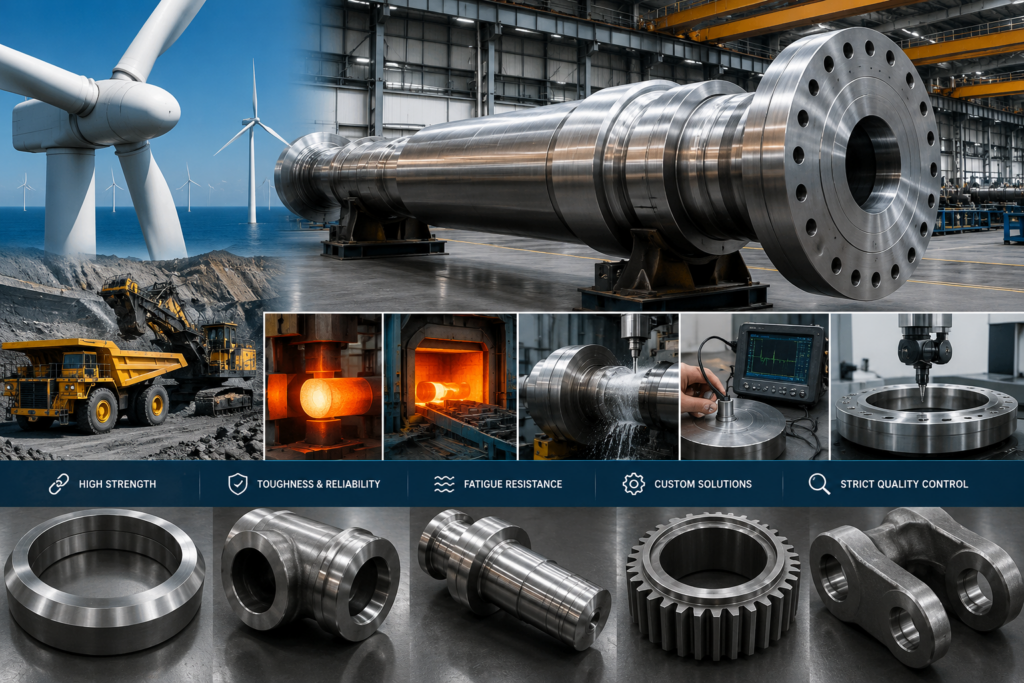
Industrial forgings are used where components face heavy load, impact, torque, fatigue, or long operating cycles. These parts often appear in wind power, mining equipment, shipbuilding, oil and gas, metallurgical machinery, construction equipment, and power transmission systems.
The reason is structural reliability.
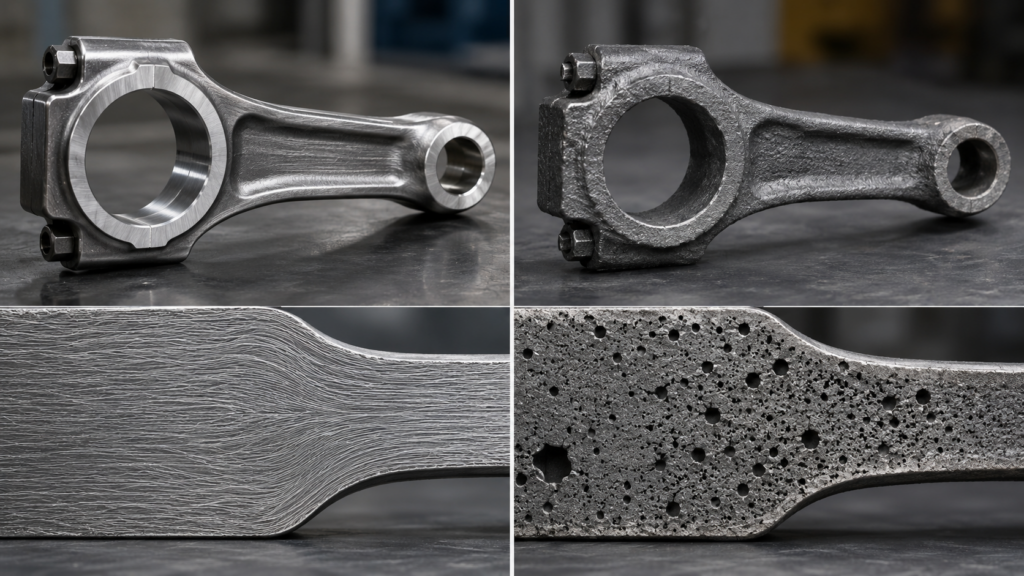
The Forging Industry Association explains in its article on how forgings compare to other processes that forging can refine internal defects and produce grain flow oriented toward the direction where strength is needed. That is a major reason forged components are often selected for critical industrial parts.
For buyers who want a broader understanding of typical forged components, this guide on forged steel parts can be used as a supporting internal resource.
Forging Industry Trends Are Moving Beyond Rough Forged Blanks
For many years, buyers treated forgings as heavy rough blanks that would be finished later. That view is becoming outdated.
Modern forging industry trends are pushing suppliers to deliver more than raw forged shape. Buyers increasingly ask for:
- controlled material selection
- defined forging ratio
- stable heat treatment
- rough machining or semi-finished machining
- ultrasonic testing
- magnetic particle testing
- hardness verification
- dimensional inspection
- full material traceability
- export-ready documentation
This change makes industrial forgings more like engineered components, not just heavy metal pieces.
The Forging Industry Association’s Product Design Guide for Forging also explains how forging design is connected with strength, grain flow, material use, and manufacturing cost. That supports a key point: better sourcing starts before production, not after the forging is already made.
What Buyers Are Really Asking For
Industrial forging trends 2026 are not only about bigger presses or larger parts. The bigger shift is buyer expectation.
| Trend | What It Means for Buyers |
|---|---|
| Higher strength demand | More forged parts for heavy-load and fatigue-critical equipment |
| Precision forgings | Less machining waste and better assembly fit |
| Traceability | Heat numbers, material certificates, test reports, and process records |
| Stable lead time | Better planning for large industrial projects |
| Customization | More drawing-based, application-specific components |
| Integrated service | Forging, heat treatment, machining, testing, and export packing |
Fortune Business Insights reports that the global metal forging market was valued at USD 70.36 billion in 2025 and is projected to grow from USD 73.43 billion in 2026 to USD 103.35 billion by 2034 in its metal forging market report. This suggests that forged components remain important in global manufacturing, but the competitive standard is changing.
Why Precision Forgings Are Becoming More Valuable
Precision forgings are not only about tighter dimensions. They help buyers reduce downstream cost.
A rough forging that needs excessive machining can increase material waste, machining time, tooling cost, and delivery uncertainty. A more controlled forging can improve consistency before machining begins.
Precision forgings are valuable when buyers need:
- better shape consistency
- less machining allowance
- reduced material waste
- smoother assembly planning
- more repeatable batch production
- better control of final part geometry
This is especially important for shafts, rings, flanges, gear blanks, hollow forgings, and forged blocks used in heavy equipment.
For custom designs, buyers can review custom forged components to understand how drawing-based sourcing can connect application requirements with forging process planning.
High-Strength Forged Components for Energy and Heavy Machinery
High-strength forged components are becoming more important because modern equipment is larger, heavier, and more demanding.
A wind turbine main shaft, for example, must handle torque, bending stress, fatigue load, and long service life. This is why large forged shafts require strict control of steel quality, forging process, heat treatment, ultrasonic testing, and dimensional inspection.
For a focused example, this article on wind turbine main shaft forgings shows why large energy equipment needs more than a simple forged blank.
Industrial forgings used in energy, mining, transportation, and heavy machinery must be matched to load, operating environment, material grade, and inspection requirements.
Quality Traceability Is Becoming a Buying Requirement
For critical forged parts, traceability is no longer optional.
A serious buyer may ask for:
- heat number traceability
- material certificate
- forging ratio record
- heat treatment curve
- ultrasonic testing report
- magnetic particle testing report
- hardness test result
- dimensional inspection report
- machining inspection record
- final photos and packing records
A 2026 Reuters report on Safran’s investment in a 30,000-ton hydraulic press notes that castings and forgings have been in short supply since the pandemic and that the company wants more control over its supply chain. The article on Safran’s forging capacity investment shows how critical forged components can become a supply chain issue, not just a manufacturing detail.
For buyers, traceability helps reduce project disputes. It also supports audits, owner approvals, shipment acceptance, and long-term equipment records.
Forged Steel Parts vs Cast Steel Parts in Critical Applications
Forging and casting both have a place in manufacturing. The right choice depends on load, shape complexity, cost, and failure risk.
| Factor | Forged Steel Parts | Cast Steel Parts |
|---|---|---|
| Grain flow | More refined and directional | Less controlled |
| Strength | Better for high-load parts | Depends on casting quality |
| Internal defects | Lower risk with proper forging | Porosity and shrinkage must be controlled |
| Shape complexity | Less flexible than casting | Better for complex shapes |
| Best use | Shafts, rings, gears, flanges, blocks | Complex shapes with moderate load |
For buyers comparing both routes, this internal guide on forged steel parts vs cast steel parts can help clarify which process fits high-load applications better.
Industrial forgings are often preferred when fatigue strength, internal soundness, and directional strength matter more than shape complexity alone.
Supply Stability Is Now Part of Forging Competitiveness
Sourcing industrial forgings is not the same as buying standard fasteners or commodity plates.
A forging order may involve steelmaking, ingot or billet selection, heating, forging, cooling, heat treatment, rough machining, inspection, repair review, packing, and export shipment. A delay in one step can affect the whole project schedule.
This is why buyers now care about supplier planning. A reliable steel forging supplier should be able to explain:
- current production capacity
- available raw material routes
- heat treatment scheduling
- machining capability
- inspection timeline
- packaging method
- delivery risk
- communication process
In long-term projects, a slightly lower unit price may not compensate for unstable lead time, missing test reports, or poor technical response.
How to Choose a Steel Forging Supplier for Long-Term Projects
A steel forging supplier should be evaluated as a process partner, not only a price source.
Before placing an order, buyers should ask:
1.Can the supplier review drawings before quoting?
2.Can they recommend suitable material grades?
3.What forging capacity do they have?
4.Can they provide heat treatment and machining?
5.What inspection methods are available?
6.Can they provide UT, MT, hardness, and dimensional reports?
7.How do they control heat number traceability?
8.What is the normal lead time for similar parts?
9.Can they support export packing and documentation?
10.How quickly do they respond to technical changes?
What Buyers Should Ask Before Ordering Forged Components
Before ordering industrial forgings, buyers should prepare more than size and weight.
Useful questions include:
- What load will the part carry?
- Is fatigue resistance important?
- What material grade is required?
- Is heat treatment needed?
- What machining allowance should be left?
- Is ultrasonic testing required?
- Is magnetic particle testing needed?
- What tolerance is expected after machining?
- Is the part used in energy, mining, marine, or heavy machinery?
- What documentation must be delivered with shipment?
Conclusion
Industrial forgings are getting harder to source right because buyers need more than heavy parts. They need strength, precision, inspection records, material traceability, machining readiness, and reliable delivery.
For long-term industrial projects, industrial forgings should be sourced from suppliers that understand both the forging process and the final application. The right forged component is not only made to shape. It is made to work under real load, real time pressure, and real quality expectations.
FAQ
What are industrial forgings?
Industrial forgings are forged metal components used in heavy machinery, energy equipment, mining, transportation, construction machinery, and other high-load applications.
Why are industrial forgings important?
They are important because forged components usually offer strong internal structure, toughness, fatigue resistance, and reliability for critical industrial parts.
What are precision forgings?
Precision forgings are forged components made with tighter shape control to reduce machining, improve repeatability, and support better assembly accuracy.
What industries use forged components?
Common industries include wind power, mining, oil and gas, shipbuilding, heavy machinery, transportation, metallurgy, and construction equipment.
Are forged steel parts better than cast steel parts?
For high-load and fatigue-critical parts, forged steel parts are often preferred because forging can improve grain flow and internal soundness. Cast parts may still work well for complex shapes with moderate load.